In a nutshell
- 🌱 Cardboard acts as a light-blocking blanket for season-long weed suppression while enriching soil as worms and microbes incorporate fibres.
- 📦 Choose plain brown corrugated, avoid glossy or waxed card, and remove tapes and staples; soy-based inks are generally safe for gardens.
- 🧰 Method: scalp growth, soak sheets, overlap 10–15 cm, cap with 5–8 cm of mulch, peg edges, and water to fuse the layers.
- 💧 Benefits include improved moisture retention, reduced seed germination from less soil disturbance, and simple planting via X-cuts.
- ♻️ Ongoing care: top up annually, monitor slugs, keep mulch-free collars; it cuts herbicide use and builds carbon-rich soil.
Gardeners dread the spring rush of nettles, couch grass and dandelions, yet there’s a simple, low-cost fix hiding in plain sight. The humble cardboard box—split, soaked and smothered in mulch—can deliver season-long weed suppression while building soil life. Done right, it’s tidy, quick and safe for edible beds. It’s also perfectly suited to the UK’s stop-start weather, keeping moisture where roots need it and reducing watering chores. Lay it once, and you’ll spend the summer tending plants rather than tugging weeds. Here’s how the cardboard trick works, which boards to choose, and the precise method that turns scraps into a professional-grade barrier.
Why Cardboard Stops Weeds Cold
Cardboard is a light-blocking blanket. Plants without light can’t photosynthesise, so they deplete their reserves and die back. That’s the blunt truth behind sheet mulching. Unlike black plastic, cardboard is biodegradable. As it softens, earthworms and microbes drag fibres into the soil, stitching organic matter into the top few centimetres. The result is a darker, looser tilth that holds water and releases nutrients steadily.
There’s another advantage. Cardboard reduces the constant churn of weeding that disturbs soil. Less disturbance means fewer buried seeds are brought to the surface to germinate. Over one season, that alone can cut the seed bank dramatically. For gardeners moving towards no-dig methods, cardboard is a bridge to calmer, cleaner beds. It’s not magic, though. Rhizomatous thugs—bindweed, horsetail, couch—are resilient. Starving them takes time. Double layers and persistent edging help, but you may still need to spot-spear regrowth at the margins. Used sensibly, this isn’t a silver bullet; it’s a reliable, quiet pressure that tilts the odds in your favour.
Choosing and Preparing the Right Cardboard
Select plain, brown corrugated sheets whenever possible. They’re thick enough to smother yet porous enough for rain to percolate. Avoid glossy retail boxes, heavy inks, and anything waxed or plastic-coated; those resist decay and can leach or shed microplastics. Always remove tapes, labels and staples—small bits left behind create a lifelong litter problem in your beds. If your supply is thin cereal boxes, stack two or three layers. Tear to fit around perennials, but aim for wide, tidy sheets elsewhere to reduce joins.
Soak the sheets before laying. Soft, damp cardboard conforms to soil contours, eliminates light leaks and knits to adjacent pieces. Overlap edges by at least 10–15 cm. Around shrubs and trees, leave a mulch-free collar of 8–10 cm so bark can breathe and doesn’t rot. Concerned about inks? Modern shipping boxes typically use soy-based inks, generally considered safe in gardens. When in doubt, stick to unprinted card. The table below summarises best choices.
| Cardboard Type | Use or Avoid | Notes |
|---|---|---|
| Plain brown corrugated | Use | Best for beds and paths; decomposes in 6–12 months. |
| Glossy or heavily printed | Avoid | May contain coatings; slower to break down. |
| Waxed produce boxes | Avoid | Waterproof; blocks air; persists too long. |
| Thin packaging/cereal boxes | Use with layers | Stack 2–3 layers and soak thoroughly. |
Step-by-Step: Laying a Season-Long Weed Barrier
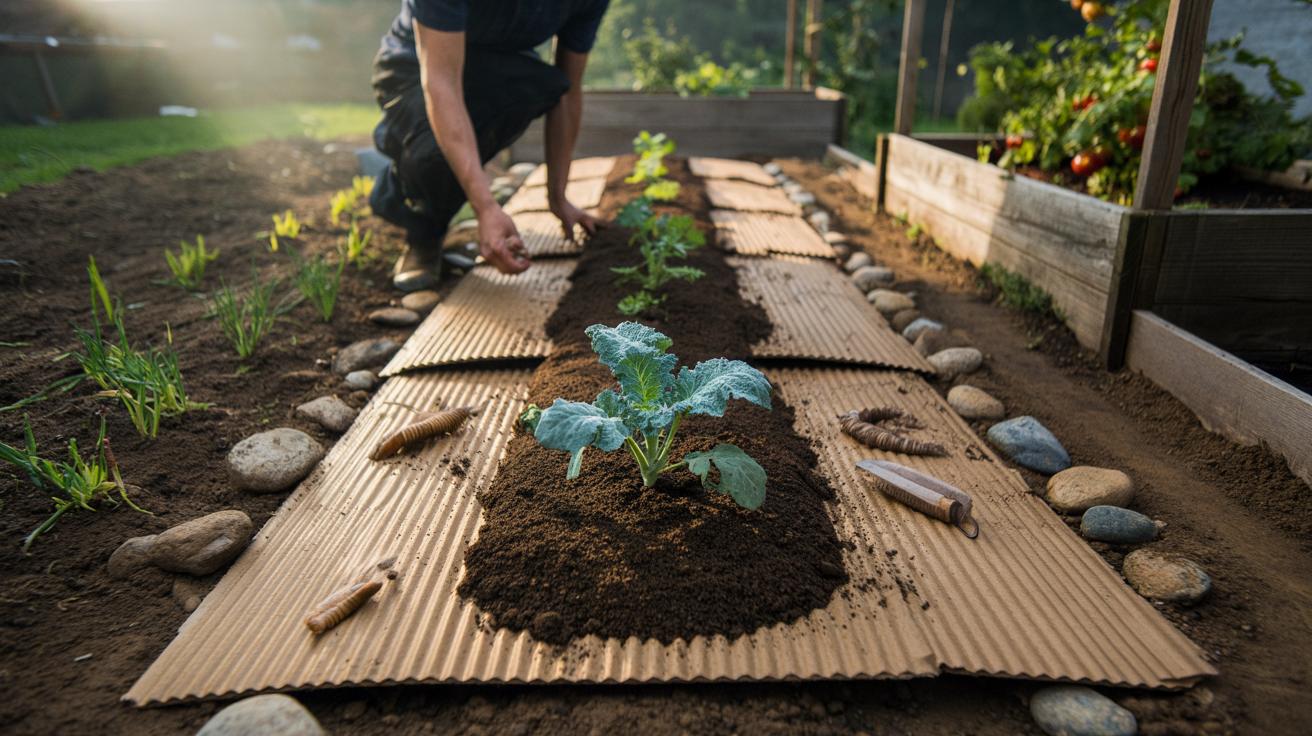
First, scalp the area with shears or a mower set low. Don’t till; you’ll only wake dormant seeds. Water the soil until evenly moist. Lay your soaked sheets, overlapping generously so no chinks of light escape. Where you have perennials or rows of veg, cut neat slits and tuck the card around stems. Think of this as wallpapering the ground—smooth, continuous, gap-free.
Now lock it in. Add 5–8 cm of organic mulch on top: compost for veg beds, or wood chips for paths and around fruit bushes. Mulch weights the cardboard, hides it from view and stops edges from curling. Peg with biodegradable pins, stones or bricks in breezy spots. Water again to weld the sandwich together. In warm spells, this system dramatically improves moisture retention, meaning fewer emergency watering runs.
Planting into the barrier is easy: pull back mulch, slice an X through the softened card, tuck in your plant, replace mulch. Keep a watch on edges and around posts—these are escape routes for opportunistic weeds. A five-minute patrol each week prevents problems spiralling into a Saturday lost to weeding.
Maintenance, Pitfalls, and Eco Benefits
Cardboard lasts one growing season in most UK conditions. By autumn, it’s usually soft and half-gone; you can top up with a fresh layer if weeds threaten, or let the site transition to full no-dig. Slugs enjoy damp hideaways, so keep mulch airy and avoid heaping it against tender stems. Beer traps, wildlife-friendly predators, and tidy edges keep populations in check. If you’re suppressing brutes like bindweed, expect skirmishes—slice any white shoots that find the light and keep pressure constant.
Nitrogen “lock-up” is minimal when a decent compost layer sits above the cardboard, because roots feed in that top zone while the card decomposes beneath. For trees and shrubs, maintain that mulch-free collar to prevent rot. Around paving, add a metal or recycled-plastic edge to stop wind-borne seeds colonising the tidy margin. The environmental upside is compelling: you’re diverting waste from the recycling stream, cutting reliance on herbicides, and building carbon-rich soil that stores moisture during hosepipe bans.
Finally, be fussy at the start. Pull every bit of tape. Check for staples. These tiny contaminants are the difference between a smart, sustainable system and a nagging clean-up later—and they’re easy to avoid with two extra minutes of prep.
Used thoughtfully, cardboard is a workhorse: a clean, quiet barrier that smothers weeds, shelters soil life and buys you time to grow. It’s inexpensive, family-friendly and perfect for plots where weekends are scarce and plants must perform. The trick is consistency—good overlaps, proper soaking, and a generous cap of mulch. Try one bed first, compare it with your usual method, and watch the difference in watering, weeding and crop vigour. Where could a few rescued boxes transform your garden this season, and which bed will you test first?
Did you like it?4.5/5 (23)