In a nutshell
- ✨ A clean dishwasher filter is the gatekeeper to spotless glassware, preventing grit recirculation, micro‑scratches, and dull finishes.
- 🔬 Know the difference: residue vs etching; clear the filter, flush the sump, then set salt and rinse aid to stop haze and permanent frost.
- 🧰 Follow a five‑minute routine: twist out, rinse, soak, inspect, and lock flat; clean weekly or monthly to protect pumps and spray pressure.
- 💧 Optimise chemistry and settings: match the water softener to hardness, use rinse aid, right‑size detergent, smart‑load glasses, and choose cycles wisely.
- ⚠️ Spot trouble early—grit, odour, standing water, noise—and act: clean the filter, purge spray arms, run a hot maintenance cycle, and replace damaged parts.
Your glasses don’t lose their sparkle because your machine is old; they lose it because the hidden gatekeeper inside is overwhelmed. That gatekeeper is the dishwasher filter, a small mesh unit that decides whether water reaches your stemware clean or contaminated with grit. When it’s clear, jets spray pure, particle‑free water and detergent. When it’s clogged, the machine recirculates microscopic debris that sandblasts delicate surfaces. A clean filter is the simplest route to spotless glassware. It saves detergent, shortens cycles, and protects pumps. And it takes minutes, not money. Here’s how that unglamorous component keeps your wine glasses brilliant—and how to keep it working at its best.
How Dishwasher Filters Protect Your Glassware
Think of the filter as a nightclub bouncer for water. Food scraps, coffee grounds, and pasta starch show up; only clean water gets in. The mesh screen captures particles before they reach the spray arms, preventing debris from pinging your glasses at high speed and scratching the surface. Those micro-scratches scatter light, dulling the shine. When the filter is clean, detergent can do chemistry instead of damage control. Water flows freely, pressure is consistent, and rinse aid can sheet off glass rather than cling to residue.
There are two broad styles: manual mesh filters that you twist out and rinse, and so‑called self-cleaning filters that rely on a grinder or back-flushing to break down soils. Both protect glassware, but manual types demand regular attention in homes that love roasts, stews, or anything that sheds fat. Either way, clogging starves the pump, causes a pressure drop, and invites undissolved food back into circulation. The outcome? Sandy grit on shelves, stubborn film on tumblers, and a bitter irony: more detergent with worse results. Keeping the filter clear restores the machine’s designed hydraulics and preserves that showroom sparkle.
The Science of Residue, Etching, and Cloudiness
Cloudy glass isn’t all the same. Residue is a removable film of fats, starches, or minerals that wipes away with vinegar or mild acid. Etching is different: permanent micro‑pitting from alkaline detergents, high heat, and prolonged contact with soil. A blocked filter increases the “soil load” in every phase, tying up detergents so they attack glass instead. Dirty water plus strong alkali equals a slow polish in the worst possible sense. Your eyes see haze; a microscope sees a frosted surface that will never truly shine again.
Hard water adds a twist. Calcium and magnesium compete with surfactants, making suds collapse and leaving limescale. If the filter is clogged, the machine often misreads turbidity, extends cycles, and overheats the mix—raising pH and time, the two drivers of etching. Rinse aid and dishwasher salt help, but they’re no match for a filter stuffed with yesterday’s risotto. The fix is sequential: clear the mesh, flush the sump, then calibrate salt and rinse aid. Do that, and your glasses meet clean, softened water and properly dosed detergent. The result is transparency, not tragedy.
Cleaning Your Filter: A Step-by-Step Routine
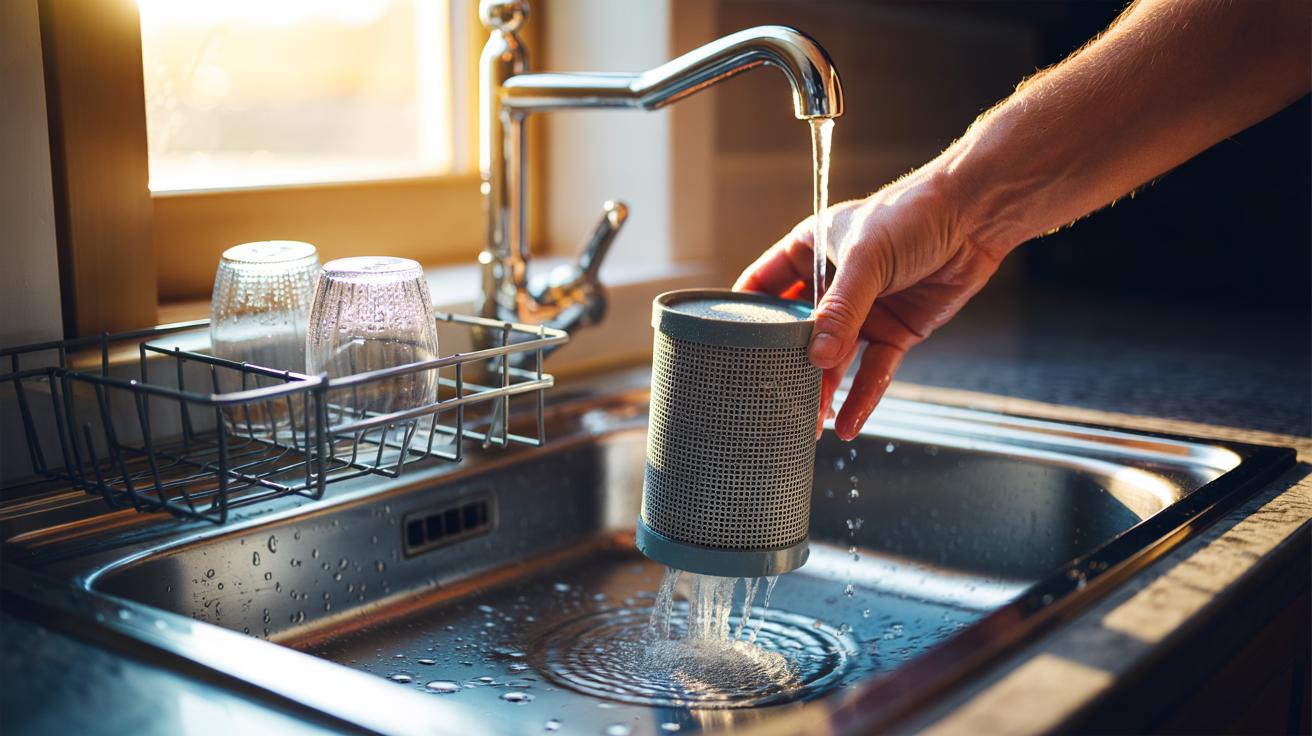
Five minutes. No specialist kit. Big payoff. Start by switching off the appliance for safety. Slide out the lower rack. Twist the circular filter assembly counter‑clockwise and lift it with the fine mesh screen. Rinse under warm running water, brushing gently with a soft toothbrush. Avoid wire scourers that tear the mesh. For greasy build‑up, soak in hot, soapy water for ten minutes; add a teaspoon of bicarbonate of soda if needed. Stubborn odours usually mean trapped protein—soak longer, then rinse thoroughly. Peek into the sump for glass shards or seeds and lift them out with tweezers.
Inspect for damage: frayed mesh, warped plastic, or broken seals let debris bypass the screen. Refit the filter, aligning tabs, and twist until it locks flat—no wobble. Run a hot maintenance cycle with the machine empty to purge lines. Make it routine: frequent cooks should rinse weekly; light users can stretch to monthly. If you live with hard water or love breaded foods, clean more often. It’s simple preventative care that saves pumps, spray arms, and your favourite stemless Bordeaux glasses.
| Filter Type | Typical Location | Cleaning Frequency | Signs It’s Blocked |
|---|---|---|---|
| Manual Mesh | Base, under lower spray arm | Weekly to monthly | Grit on racks, musty smell, slow drain |
| Self-Cleaning/Grinder | Integrated in sump | Quarterly inspection | Noise, cloudy glasses, food flecks post-wash |
Hard Water, Detergents, and Settings: Getting the Mix Right
Once your filter is spotless, tune the rest. If you’re in a hard‑water area, set the machine’s water softener to match local hardness and keep the salt reservoir topped up. Use rinse aid; it reduces surface tension so water sheets off glass. Powder detergents allow fine control in tough water, while pods are convenient but can be over‑alkaline for smaller loads. Right dose, right chemistry, clean filter—this is the trifecta for gleaming glass. Eco cycles save energy but may underperform with heavy soil; pair them with meticulous scraping and a pristine filter.
Load smart. Keep glasses on the top rack, angled, with space for air. Avoid nesting. Don’t pre‑rinse aggressively; scrape instead, so enzymes have something to digest without overwhelming the mesh. Temperature matters: a hot final rinse speeds drying and minimises spotting when the filter isn’t adding extra debris. If haze persists, try a citric acid cleaner to de‑scale internals after you’ve cleaned the filter. Then reassess detergent dose. With the plumbing side optimized and the filter acting as an effective sentinel, even budget machines can deliver boutique‑hotel clarity.
Spotting Trouble Early: Telltale Signs and Fixes
Grit on the top rack. A sour, damp‑dishcloth smell. Standing water after a cycle. These are classic signs your filter and sump need attention. Check for milky swirls on glass straight from the machine; if they vanish with a vinegar wipe, it’s residue, not etching—good news. Persistent rainbow sheen suggests fat in the system, usually from a filter matted with grease. Act early and you protect the glass—and the pump bearings. Leave it, and you risk cavitation noise, poor spray rotation, and eventually a repair bill larger than a case of champagne flutes.
Fixes are straightforward. Clean the filter, purge the spray arms, and run a hot maintenance cycle with a dishwasher cleaner. Swap to a measured powder dose while you troubleshoot. If the filter won’t lock flat, replace it; bypass gaps undo every other effort. For chronic clouding in hard‑water postcodes, add a small amount of rinse aid and recheck your salt setting after a week. Keep a note by the machine with dates; five minutes monthly beats hours hand‑polishing glasses before guests arrive.
In the quiet hierarchy of a dishwasher, the humble filter does the heavy lifting for your most fragile items. Keep it clean and your glasses sparkle; neglect it and everything gets harder, pricier, duller. The simplest maintenance task delivers the most visible upgrade. It’s water, chemistry, and common sense, all hinging on one mesh cylinder. Now that you know the mechanism and the method, will you give your filter a regular date with warm water and a brush—or wait until the next cloudy glass shouts for attention?
Did you like it?4.5/5 (26)