In a nutshell
- 🌿 Use the compost layering method: alternate browns and greens to hit a C:N ratio of 25–30:1 for rapid, odour-free decomposition.
- 🧱 Build thin, repeatable layers: start with an airy base, add 3–8 cm browns and 2–5 cm greens, seed with mature compost, and finish with a protective brown “duvet”.
- 💧 Control moisture and air: aim for a “wrung sponge” (50–60%), add aeration channels, avoid compression, and correct imbalances by adding extra browns or greens.
- 🔥 Track heat for speed and safety: reach a thermophilic 55–65°C in 24–72 hours, turn at 45–50°C, and if it exceeds 70°C, add browns and aerate to protect microbes.
- 🧪 Choose materials wisely: rely on dry leaves, straw, shredded cardboard (browns) and grass clippings, food scraps, coffee grounds, manure (greens); avoid meat, dairy, and oils.
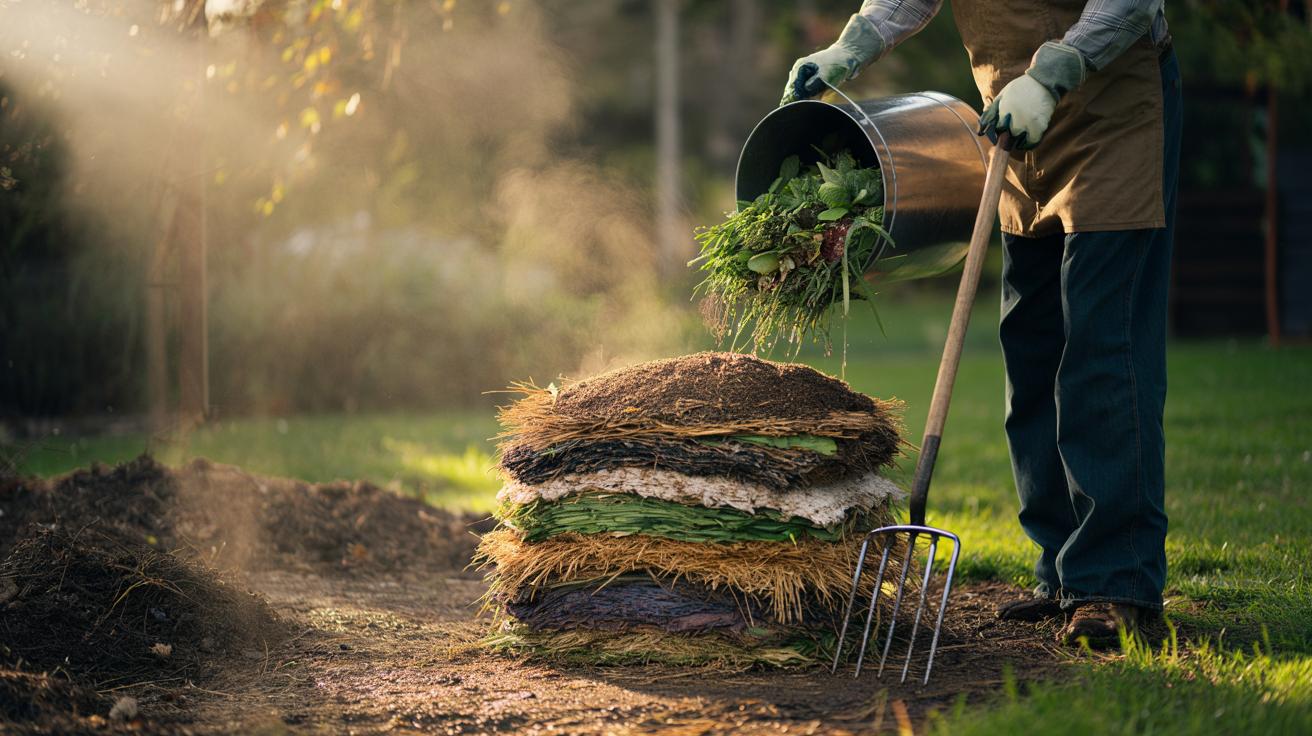
The fastest composters don’t rely on gadgets. They rely on pattern. The compost layering method—sometimes nicknamed the “lasagne” approach—uses alternating bands of browns (carbon-rich) and greens (nitrogen-rich) to organise air, moisture and microbes with surgical precision. Think architecture, not dumping. Oxygen flows. Heat builds. Nutrients balance. When layers are sized and watered correctly, decomposition accelerates naturally, without chemical boosters or constant turning. Expect a warm core, crumbly texture and fewer odours. Expect speed. For gardeners in small terraces or sprawling plots, this is the most reliable way to turn peelings and prunings into dark, life-giving humus in weeks rather than months.
Why Layering Accelerates Compost
Layering is not just neatness; it’s physics and biology collaborating. A predictable alternation of coarse browns and moist greens builds micro airways that feed aerobic microbes. Those microbes love balance. A target carbon-to-nitrogen (C:N) ratio of roughly 25–30:1 lets them reproduce fast, shed heat, and chew through material. Browns deliver carbon and structure; greens supply nitrogen and moisture. Consistent layer thickness prevents soggy mats that go anaerobic and smelly. Heat then rises into a stable thermophilic band, typically 55–65°C, which speeds breakdown and knocks back weed seeds and many pathogens.
Capillary action matters too. Browns act as sponges, pulling excess moisture away from greens while still keeping the mass at the ideal “wrung sponge” feel. Meanwhile, uneven particle size—shredded leaves mixed with chunkier stems—creates voids for aeration. Think of it as a lung in slow motion. Short layers, repeated often, keep chemistry and airflow even from edge to core. That uniformity is why layered heaps heat up quickly and stay hot for longer. Random dumping wastes energy; rhythm concentrates it. The result is faster, finer compost with fewer interventions.
Choosing Browns and Greens Wisely
Not all inputs are equal. “Browns” are dry, fibrous and carbon-rich: dry leaves, straw, shredded cardboard, woody prunings. “Greens” are moist and nitrogen-rich: fresh grass clippings, kitchen scraps, coffee grounds, herbivore manure. Chop everything to speed microbial access, but keep some pieces coarse to maintain structure. Avoid meat, dairy and oils; they attract pests and create odours. Glossy or heavily printed cardboard is best left out. Feed the heap a mixed diet, not a monoculture. If your greens are very wet, bulk them with extra browns. If autumn leaves are leathery, shred them or blend with soft greens for an instant C:N correction.
| Material | Type | Typical C:N | Best Prep | Suggested Layer Depth |
|---|---|---|---|---|
| Dry leaves | Brown | 40–80:1 | Shred; lightly moisten | 5–8 cm |
| Shredded cardboard | Brown | 250–350:1 | Rip into strips; dampen | 4–6 cm |
| Straw | Brown | 70–100:1 | Cut short; moisten well | 6–8 cm |
| Sawdust | Brown | 200–700:1 | Mix thinly; add extra greens | 2–3 cm max |
| Food scraps | Green | 15–20:1 | Chop small; drain | 3–5 cm |
| Grass clippings | Green | 12–20:1 | Mix with browns to prevent mats | 2–4 cm |
| Coffee grounds | Green | ~20:1 | Scatter thinly | 1–2 cm |
| Herbivore manure | Green | 10–20:1 | Mix with straw/leaves | 3–6 cm |
Use the table as a quick steering wheel. If your heap smells of ammonia, you’ve overdone greens. Add a generous brown cap and fluff. If it’s dry and cold, fold in a juicy green layer and water. Balance is dynamic, not fixed.
Building the Stack: Step-by-Step Layers
Start with a breathable base: 5–10 cm of twiggy prunings or coarse straw to lift the pile and draw air underneath. Add 5–8 cm of a brown mix, then 3–5 cm of greens. Sprinkle a handful or two of mature compost or garden soil as an inoculant; it seeds the heap with microbes and grit that speeds breakdown. Water each lift until it feels like a wrung sponge—moist but not dripping. Repeat this pattern. Keep layers shallow and even. Short layers help you correct course quickly if something starts to clump or dry out.
Build to 1–1.2 metres high so the heap can hold heat yet remain safe to manage. Finish with a thick brown “duvet” to lock in moisture and deter flies. In rainy spells, use a loose lid of cardboard or a breathable tarp; in drought, water lightly as you add layers. Never stomp the heap. Compression kills airflow and slows everything. If you have only greens today, hold them in a caddy and wait for browns tomorrow, or shred a box. That patience pays dividends in speed and quality.
Moisture, Air, and Heat Management
Moisture is the throttle. Aim for 50–60% water content, which feels damp but not squelchy. Use the squeeze test: a handful should release one or two drops at most. If it gushes, fold in browns. If it crumbles, add greens or water. Add vertical air channels by poking holes with a stake or inserting a perforated pipe; this keeps the core aerobic without constant turning. Air plus moisture equals momentum. Good structure means you can turn less and still stay hot, saving time and effort.
Watch the heat curve. A layered heap should warm within 24–72 hours, peak around 55–65°C, then gradually cool. When it drops below 45–50°C, do a gentle turn: mix outer cool material into the centre, re-layering as you go. If temperatures rocket above 70°C, you risk killing the beneficial workforce—add browns, aerate, and lightly water. Persistent odour signals anaerobic pockets; break them up and cap with leaves. In dry, windy weather, mist the surface and maintain a brown cover. Steady, small corrections keep decomposition fast and clean.
With a little choreography, compost layering becomes second nature. You’ll read the heap the way bakers read dough: by feel, by warmth, by smell. The reward is rich, friable compost that feeds soil life and cuts waste to nearly nothing. It’s quiet alchemy in a back corner of the garden. No drama, no gadgets, just materials arranged with intent. Build thin layers, keep them moist and airy, and nature will do the heavy lifting. What will you layer first this weekend—leaves and coffee, or straw and kitchen peelings—and how quickly do you want your compost to be ready?
Did you like it?4.7/5 (30)