In a nutshell
- 🌙 Evening watering prolongs leaf wetness, raising disease risk from powdery mildew, botrytis, blight, and black spot as cool, humid nights favour pathogens.
- 🫁 Roots need oxygen; night-time saturation causes root hypoxia, slowing growth and weakening plants—especially in containers and heavy, clay-rich soils.
- ⏱️ Plant circadian rhythm primes daytime nutrient uptake; watering at night can drive leaching and imbalances, producing soft, pest-prone tissues.
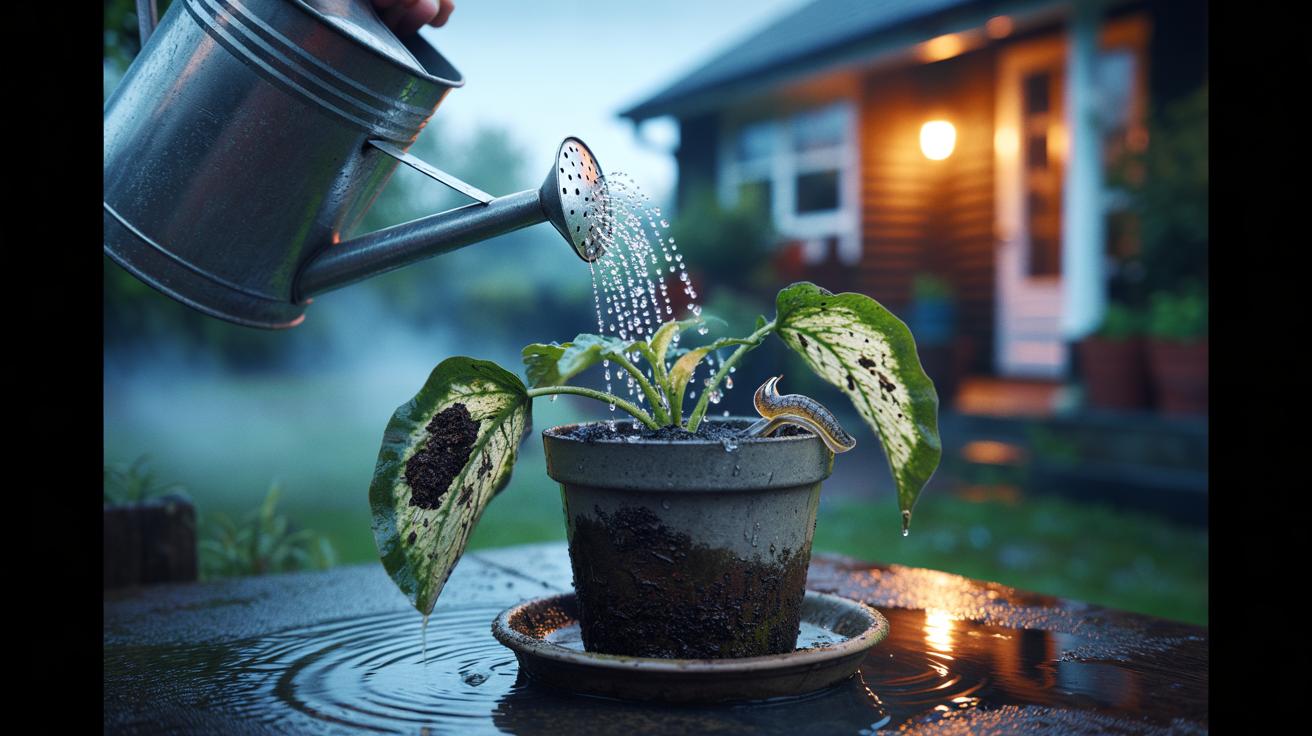
- 🐌 Damp nights supercharge pests like slugs, snails, and fungus gnats; keep surfaces dry, target soil only, and empty saucers to deny them habitat.
- 🌅 Opt for early morning and soil-level watering to extend drying windows, protect roots, and promote sturdier stems, cleaner foliage, and stronger blooms.
Many of us reach for the watering can after work, when the sun dips and the air cools. It feels gentle. Unhurried. Yet for plants, that twilight top-up can quietly sabotage growth. Night brings slower evaporation, lingering damp, and a surge in disease-friendly conditions. Evening watering also alters how roots breathe and how nutrients move, creating subtle stresses that show up weeks later as weak shoots and lacklustre blooms. What looks like kindness can, in reality, be a nightly setback. Understanding the science of water, air and plant timing helps you give moisture when it does the most good — and avoids the pitfalls that stunt healthy development.
The Night-time Moisture Trap and Disease Pressure
After dusk, leaves cool and air humidity rises. The plant’s transpiration slows, and surfaces stay wet for longer. Those shimmering droplets? They can be landing pads for powdery mildew, botrytis, and leaf spots that spread invisibly until the damage is obvious. Water applied late sits on foliage and the upper soil, giving pathogens hours to germinate without the drying power of sun or breeze. In the British climate — often mild, damp, and still at night — that’s an ideal incubator. Persistent overnight dampness is an open invitation to disease, especially in crowded borders and greenhouses with limited airflow.
The physics is straightforward: warm day, cool night, condensation forms; add water and you extend the wet period. On lawns, the effect can fuel red thread; on tomatoes and roses, it can be devastating, with black spot and blight gaining a foothold. Even houseplants suffer, as water beading along leaf margins encourages bacterial leaf lesions. Morning watering, by contrast, provides a long drying window, reducing leaf wetness duration — a key predictor of infection. For most crops and ornamentals, it’s the timing tweak that saves sprays, money, and heartache.
| Time | Leaf Drying Window | Pathogen Risk | Root Oxygen | Notes |
|---|---|---|---|---|
| Early morning | Long | Low | Good | Aligns with daytime uptake; ideal for most plants |
| Afternoon heat | Moderate | Moderate | Good | Higher evaporation; target soil, not foliage |
| Evening/night | Short | High | Reduced | Wet foliage and cool soils heighten disease pressure |
Starved of Air: Roots, Oxygen, and Overnight Saturation
Roots are living tissues that need oxygen to respire. When we saturate soil in the evening, water fills the pore spaces just as temperatures drop and diffusion of oxygen slows. Microbes keep breathing throughout the night, consuming what oxygen remains and producing carbon dioxide. The result can be transient root hypoxia, a stress that blunts cell division, impairs nutrient transport, and ultimately suppresses growth. In containers and clay-heavy beds — common across the UK — those airless hours stack up day after day. Seedlings, herbs, and plants in peat-free mixes are especially vulnerable because fine roots suffocate first.
Morning watering is different. The same volume infiltrates, but sunshine and daytime warmth improve gas exchange, replenishing oxygen in the rhizosphere. Plants then push water through the xylem while photosynthesising, using the moisture when energy demand peaks. Water at night, and you force roots to sit in a cold, saturated medium they can’t properly breathe in. You may notice pale, floppy growth, slow recovery after pruning, or a tendency to wilt under midday sun despite “enough” water. That’s the hallmark of compromised roots. Adjusting the clock on your routine, not just the quantity, often restores vigour within a fortnight.
Nutrients, Pests, and the Plant Body Clock
Plants run on a circadian rhythm. Ion channels and pumps that move potassium, calcium, and nitrate are primed for daytime throughput. Drenching in the evening can disrupt that rhythm: nutrients leach past roots overnight or remain unused, leading to imbalances such as tip burn or weak, sappy tissue that pests adore. In containers, repeated night watering dilutes the root zone then concentrates salts as water evaporates indoors, stressing roots twice over. Outdoors, the combination of cool temperatures and limited transpiration slows uptake just when surplus moisture magnifies problems.
There’s a pest angle, too. Slugs and snails patrol after dark and thrive on damp surfaces; fresh night-time watering lays a slick runway to your hostas, lettuces and seedlings. Fungus gnats in houseplants explode in numbers when the top centimetre never dries. Mosquitoes exploit puddling in trays. By keeping surfaces dry overnight, you remove the conditions many pests and pathogens rely on. If heat or hosepipe restrictions push you towards late watering, aim for the soil, not the leaves; deliver a deep, measured soak; and empty saucers within 20 minutes so pots don’t stew. It’s about moisture at the roots, not wetness everywhere.
So, could the quiet convenience of evening watering be holding your garden back? The evidence points that way: heightened disease risk, lower root oxygen, muddled nutrient uptake, and a pest boom just when plants are least equipped to use the water. Shift the habit and you’ll likely see sturdier stems, cleaner foliage, stronger blooms. Choose early mornings for most watering, reserving evenings for emergencies handled with precision at soil level. What one change will you make this week — a timer, a mulch, a new routine — to give your plants water when it truly helps them grow?
Did you like it?4.4/5 (25)