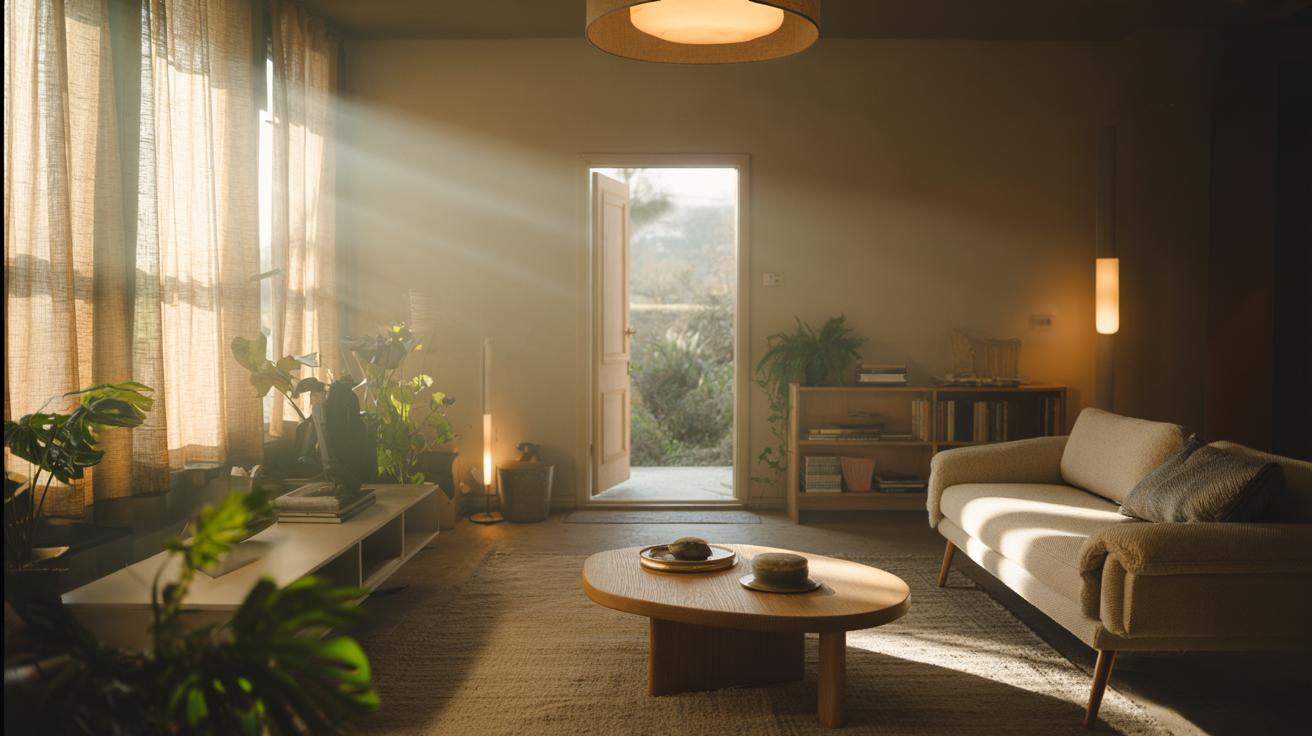
In a nutshell
- 🧠 Scientists link calmer homes to reduced cognitive load using prospect & refuge and attentional restoration: clear movement, sight lines to doors, and predictable flows lower baseline stress.
- 🛋️ Layout rules: keep walkways 80–100 cm, preserve negative space (about 40% clear floor), choose a single focal point, and prefer soft, rounded edges to signal safety.
- 💡 Sensory tuning: use layered lighting (ambient, task, accent), maximise daylight, add rugs and curtains to absorb noise, and incorporate biophilic textures (wood, wool, plants) for calmer physiology.
- 🏠 Room-by-room fixes: living room seating with a view of the door, sofa slightly off the wall, round coffee tables; bedroom headboard on a solid wall; home office with refuge plus side prospect; kitchen-diner with benches and a defined traffic lane.
- ⚡ Quick wins on any budget: clear sight lines, keep roughly 40% of floors open, remove one item from every surface, then add a plant, a rug, and a warm lamp to feel immediate stress relief.
Stressed at home? You’re not alone. British households are juggling work, care, and spiralling costs, and the place meant to soothe often ends up shouting back. Scientists studying how environments affect the brain say layout matters more than we think. Rearranging furniture to support clear movement, balanced sight lines, and softer acoustics reduces the mental “noise” our nervous system must filter. It’s not an expensive makeover. It’s about cognitive load, not couture. Practical tweaks—where the sofa points, how the bed sits, what the hallway hides—change how safe, spacious, and controllable rooms feel. Small shifts, big pay-off. Your space should make calm the default, not a lucky accident.
The Science Behind Calmer Rooms
Environmental psychologists point to three pillars that link layout to mood: cognitive load, prospect and refuge, and attentional restoration. Visual clutter, blocked routes, and competing focal points force the brain to triage stimuli. That burns attention and raises tension. By contrast, rooms with clear command points and predictable flows demand less processing, letting stress dial down. When your body can anticipate where to move, your mind stops scanning for threats. The classic “prospect and refuge” balance—open views plus a supportive back—appears across studies of comfort and safety. Think: being able to see the door while your seat has a wall or high-back behind you.
Light and nature cues matter as well. Daylight stabilises circadian rhythms, while plant textures and wood tones signal safety to the ancient brain. These biophilic touches don’t need a conservatory; a fern near the desk, a timber side table, even a landscape print can help. There’s also the rhythm of space: alternating zones of action and rest stops the whole home from feeling like a corridor. The science is simple: fewer conflicts for your senses equals lower baseline stress.
Layout Rules That Lower Cognitive Load
Start with flow. Leave a clear, straight walkway of 80–100 cm between key points: door to sofa, kitchen sink to hob, bed to wardrobe. Angle your main seat so you can see the entry without craning. That single change reduces micro-alertness. Next, commit to negative space: keep roughly 40% of floor area visually open. It lets the eye rest, which helps the brain rest. Zoning works too—reading chair plus lamp equals a calm corner; toys corralled in one basket equals fewer tripping hazards and fewer cortisol spikes. Make the room tell a simple story, and your body will stop interrogating it.
| Principle | What To Do | Stress Effect |
|---|---|---|
| Prospect & Refuge | Seat with back support, sight line to door | Reduces hypervigilance |
| Negative Space | Keep 40% of floor area clear | Lower visual load |
| Single Focal Point | Choose fireplace, window, or artwork—never all | Stops attention tug-of-war |
| Soft Edges | Round coffee tables, curved lamps | Signals safety, reduces tension |
In bedrooms, the headboard against a solid wall is ideal, with balanced bedside lighting to avoid stark contrasts. Kitchens benefit from a clear prep triangle and a clutter-free counter: one tray for daily kit, everything else hidden. Remove one item from every surface and watch the room expand. These are not style rules; they’re stress rules in disguise.
Light, Sound, and Texture Do the Heavy Lifting
Calm rooms control stimuli. Begin with layered lighting: ambient (ceiling), task (desk or under-cabinet), and accent (lamps or picture lights). Position sofas to face or sit alongside windows, not block them. Daylight broadens peripheral vision and reduces squinting, easing mental fatigue. At dusk, warm lamps signal wind-down. If lighting makes you guess, your brain stays on duty. Mirrors can amplify light but place them to bounce greenery or sky, not clutter. Night-time glare? Add dimmers or bulbs under 3000K for softness.
Sound shapes stress, too. Hard surfaces ping noise around, keeping the nervous system edgy. Add a rug under seating, lined curtains, or a fabric headboard to soak up reverb. Bookshelves act as diffusers, turning echoes into a murmur. Then texture: weave, wood, wool. These natural finishes boost biophilic comfort, slowing heart rate and smoothing breath. Keep colour palettes coherent—two mains, one accent—so the eye stops jolting between zones. Softening the room’s edges softens your edges.
Room-by-Room Moves for Real Homes
Living room: Pull the sofa off the wall by 10–15 cm to create a shadow line and instant depth. Choose one focal point—bay window or media unit—and align seating accordingly. Use a round table in tight terraces to ease circulation. Hide cables in a basket; it’s visual clutter with a trip hazard bonus. Bedroom: Headboard to wall, sight line to the door, pathways clear on both sides. Replace glaring bedside lamps with warm, directional lights. One chair or ottoman is enough. Two become a dumping ground.
Home office: Desk facing a wall with a side view to daylight gives refuge plus partial prospect. Keep the camera background calm—one plant, one print. Kitchen-diner: Bench seating along a wall reduces chair sprawl. A washable runner defines the traffic lane, steering kids and pets. Small flats and rentals: Foldable screens create zones without drilling. Use over-door hooks to free wardrobes. Think in layers—flow, light, texture—and let furniture serve the plan, not the other way round. Stress lifts when every piece earns its place.
None of this requires a renovation budget. It asks for intent. Map your routes, clear the sight lines, soften the echoes, and let daylight lead. Keep 40% of the floor open and choose a single focal point—two habits that calm a space in under an hour. Then add a plant, a rug, and a lamp for depth. Your home will breathe, and you will with it. Ready to test it this weekend and feel the difference on Monday morning? Which room will you rethink first, and what one move will you try before anything else?
Did you like it?4.3/5 (20)