In a nutshell
- 🌬️ Bicarbonate of soda — the £1 pantry staple — neutralises acidic volatiles and adsorbs smells, removing fridge odours instantly without adding any fragrance.
- 🧪 It works thanks to its alkaline nature and large surface area, converting sharp acids into non-odorous salts; it’s food-safe and effective at fridge temperatures.
- 🥄 Use 2–3 tbsp in a shallow dish on the middle shelf; stir weekly, double up for strong smells, and replace every 30–60 days — never return used soda to cooking, repurpose it for bins or drains.
- 🧠 Boost results with a wider dish, a lidded container with holes for kids/pets, and occasional partners like activated charcoal or dried coffee grounds during heavy-odour periods.
- 💷 It’s a low-cost, eco-friendly fix: about £1 per 200–250g tub, minimal waste, and better near food than fragranced gels; a table of options shows realistic lifespans and costs.
There’s a quiet hero hiding at the back of your cupboard. It isn’t fancy, and it certainly isn’t expensive. Yet when your fridge smells like last night’s curry met this morning’s fish pie, it steps up. That hero is bicarbonate of soda — better known as baking soda — and a simple £1 tub can remove lingering fridge odours instantly. Forget scent-masking sprays; this is chemistry doing heavy lifting, fast. With a shallow dish and a teaspoon, you can strip away stale aromas, keep produce fresher for longer, and make every door-open a breath of clean air. Here’s how and why it works.
Why Bicarbonate of Soda Works Instantly
At first glance, bicarbonate of soda looks unassuming: a fine white powder with no fragrance. Its power lies in its alkaline nature and a crystal structure that offers a large surface area for odour molecules to bind to. Many fridge smells are caused by acidic compounds — think acetic acid from pickles or butyric acid from dairy. Bicarbonate reacts with those acids and neutralises them, turning sharp, nose-wrinkling volatiles into non-odorous salts. That’s why it doesn’t just disguise smells; it removes them.
There’s also gentle adsorption at play. Volatile molecules settle on the powder’s surface, where they’re held and damped down. In practice, that means speed. Spread thinly in a dish, bicarbonate starts capturing odours within minutes. Give it an hour and the background funk fades to nothing. It’s safe, food-friendly, and stable at fridge temperatures. Crucially, it won’t perfume your groceries like scented gels. It leaves no lingering fragrance of its own, which is exactly what you want next to delicate cheeses, berries, or milk.
Because it’s chemically modest yet effective, a small amount goes a long way. A few tablespoons in a shallow ramekin create a big active surface. That’s the trick: more exposure equals faster odour removal.
How to Use It: Step-by-Step Fridge Deodorising
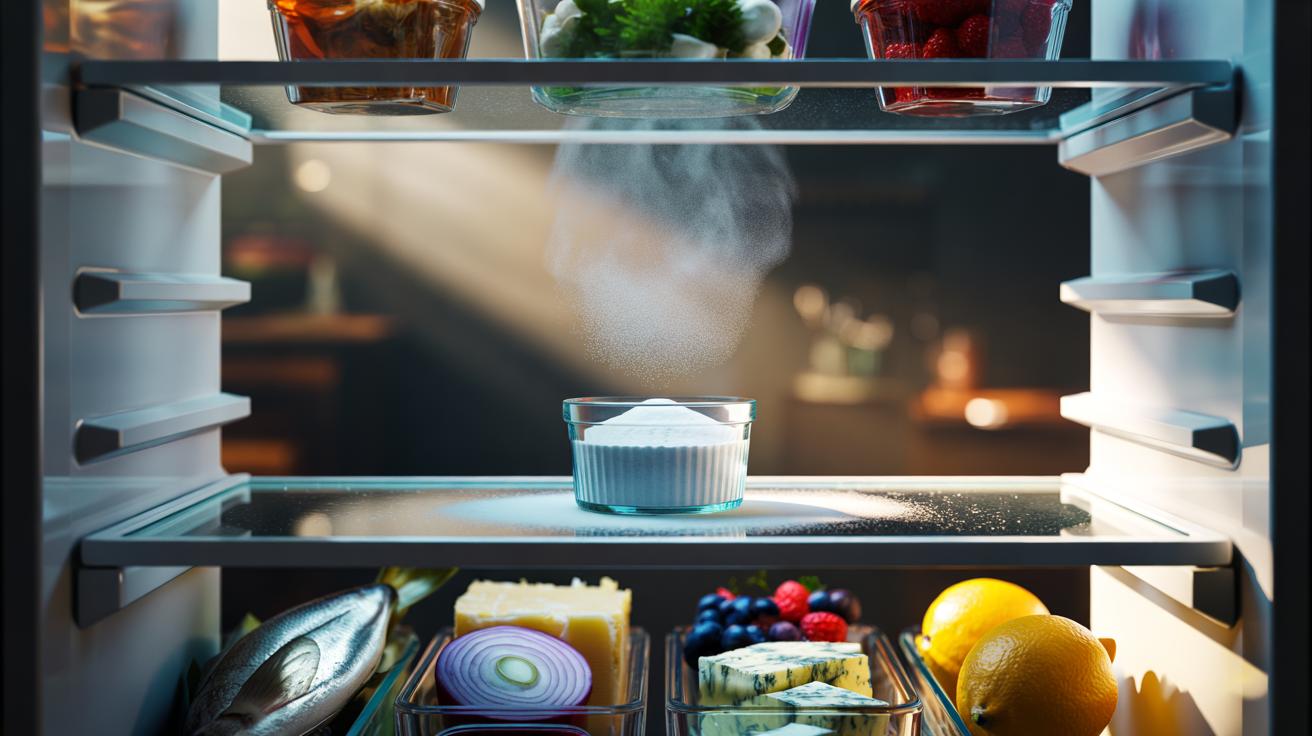
Start simple. Remove obvious culprits — uncovered leftovers, leaking jars, wilted herbs. Wipe any spills with warm water and a dash of washing-up liquid; a clean surface helps the deodoriser work faster. Now take two to three tablespoons of bicarbonate of soda and spread it in a shallow dish or saucer. Don’t pack it; you want maximum surface area. Place the dish on the middle shelf so air can circulate freely around it. Within 10–30 minutes, most light odours will noticeably drop; within a few hours, stubborn smells retreat.
For a serious stink (fish, blue cheese, forgotten veg), double up: one dish on the top shelf, another in the salad drawer. Replace or stir the powder weekly to expose fresh surfaces. Label the dish with today’s date. After 30–60 days, swap it out entirely. Never return used bicarbonate to your baking supplies — it’s been busy absorbing odours. Instead, repurpose it: sprinkle into the kitchen bin, freshen trainers, or combine with vinegar to fizz through sluggish drains.
Quick wins matter too. Store pungent foods in sealed containers. Keep the fridge at 3–5°C. Leave airflow gaps around items. These habits reduce new smells and let your £1 deodoriser truly shine.
Smart Upgrades and Safety Tips
Want faster results without spending more? Increase exposure. A wider dish beats a deep jar because more powder meets more air. Gently stir the bicarbonate of soda every few days to “refresh” the top layer. If you’ve an American-style fridge-freezer with strong airflow, place a second dish near the fan intake; it scrubs circulating air continuously. For onion or fish explosions, a fresh tablespoon sprinkled on a plate works like an emergency sponge, then tip it away after duty.
Pairing helps. Pop a sheet of kitchen paper under the ramekin to catch condensation and stray grains. Keep the powder away from strong-smelling opened foods to prevent cross-contact. Bicarbonate is food-safe, but once it’s absorbed odours, don’t cook with it. If you have pets or curious kids, choose a lidded container with holes punched in the top — the airflow remains, the mess doesn’t.
Some households layer strategies. A bowl of cold coffee grounds or a small pouch of activated charcoal can complement bicarbonate during peak periods (post-holiday feasts, seafood suppers). But for everyday use, the £1 bicarbonate staple is more than enough, quietly restoring that just-cleaned freshness without perfumes or propellants.
Cost, Longevity, and Eco Credentials
For budget-conscious kitchens, this is a rare triple win: cheap, effective, and low-waste. A supermarket own-brand tub of bicarbonate of soda often costs about £1, and a single tub can deodorise for months when used a few tablespoons at a time. It works without electricity, refills, or plastic cartridges. When spent, it still serves a second life in drains or the bin, cutting waste. Compared with fragranced gels, you’re not swapping one smell for another or adding chemical scents near food.
Here’s a quick glance at options many UK households use, with realistic lifespans and costs.
| Method | Quantity | Placement | Replace Every | Approx. Cost |
|---|---|---|---|---|
| Bicarbonate of soda | 2–3 tbsp in shallow dish | Middle shelf; add one to salad drawer for strong smells | Stir weekly; replace 30–60 days | £1 per 200–250g tub |
| Coffee grounds (used, dried) | Small bowl | Anywhere with airflow | 1–2 weeks | Near-zero (leftover) |
| White vinegar | Small open cup | Back of fridge | Few days | £0.10–£0.20 per use |
Each option can help, but bicarbonate’s neutrality makes it ideal near dairy, fruit, and cooked meals. It’s also kinder to the planet: minimal packaging, multi-use, no aerosols.
From quick spill clean-ups to ongoing freshness, a shallow dish of bicarbonate of soda is the simplest path to a sweet-smelling fridge. It works fast, it’s safe beside food, and it keeps running costs down to pennies per week. Set it out today and the stale tang will melt away, leaving only the scent of nothing — the best aroma a fridge can have. What lingering smell is bothering your kitchen right now, and where will you place your first dish to put it to the test?
Did you like it?4.6/5 (24)