In a nutshell
- 🧪 The science: white vinegar (5% acetic acid) dissolves mineral deposits and cuts grease, lowers surface tension, and dries clean for truly streak-free mirrors.
- 🧼 Exact method: mix 1:1 vinegar:distilled water (one drop washing-up liquid for hairspray), light mist, S-strokes with a microfibre, then two-cloth buff to a squeak; avoid spraying edges.
- 📊 Smart ratios: routine clean 1:1; heavy residue 2:1 + 1 drop detergent; daily wipe 1:3; hard water uses distilled to prevent re-depositing.
- ⚠️ Pitfalls to dodge: don’t overspray edges, skip paper towels, never clean a hot/fogged mirror, keep vinegar off stone/marble, and mist the cloth for antiques or electrified panels.
- 💡 Pro tips: do mirrors before the sink, check smears in oblique light, run ventilation for humidity control, launder microfibres without softener, and use a dry squeegee in high-residue bathrooms.
Cleaners across the UK whisper about a humble cupboard staple that outperforms pricey sprays on bathroom glass. The secret? A simple white vinegar mix that dissolves residue, cuts through limescale haze and leaves mirrors gleaming. It’s inexpensive, eco-conscious and brutally effective in hard-water areas. The technique is specific, though. Ratios matter. So does the cloth. The payoff is immediate: fewer swirls, no cloudy finish, and a clarity that makes bulbs look brighter. Master the method once and you’ll stop buying “mirror-only” cleaners for good. Here’s the formula, the why behind it, and the professional tweaks that make the result truly streak-free.
The Science Behind Streaks and Why Vinegar Wins
What we call “streaks” is often a mix of mineral deposits from hard water, soap film, aerosol overspray and leftover detergent from previous cleans. These deposits scatter light, so any swirl or drag mark becomes visible the second the mirror dries. White vinegar, typically five percent acetic acid, attacks that build-up in two ways: it dissolves alkaline minerals such as calcium carbonate and breaks the bond between greasy residues and glass. The solution also lowers surface tension, so liquid sheets evenly rather than beading, which is where streaks usually start. That’s why vinegar feels “self-levelling” on the glass and dries cleaner with less effort.
Professional cleaners lean on vinegar because it leaves no sticky polymers behind. Many fragranced sprays contain gloss agents that look good for a day, then grab dust and steam. Vinegar flashes off quickly, especially when cut with distilled water, and it doesn’t yellow frames or fog silvering when applied correctly. It’s also cheap, biodegradable and odour dissipates fast. If the smell worries you, know this: good ventilation and a hot rinse of your cloth make it vanish within minutes.
The Exact Method: Mix, Spray, Wipe, Buff
Start with the right mix. In a spray bottle, combine one part white vinegar with one part distilled water. Distilled is key in limescale zones; tap water can re-deposit minerals. If the mirror carries hairspray or heavy toothpaste mist, add one tiny drop of washing-up liquid. Shake gently. Do not over-suds — bubbles equal film, and film equals streaks.
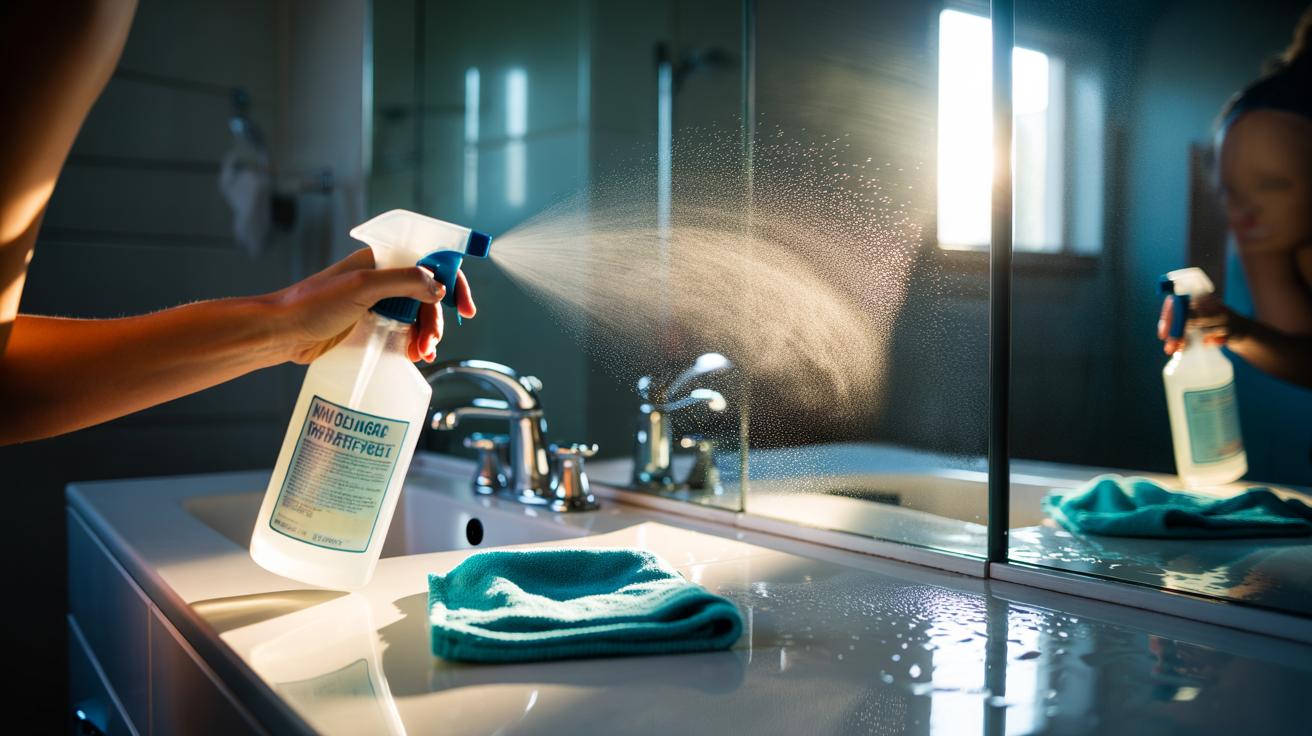
Use two clean microfibre cloths. Lightly mist the mirror; never drench it, and avoid spraying the edges where the backing can corrode. With cloth one, wipe in tight S-shaped strokes from top to bottom, overlapping slightly. Flip the cloth often to keep picking up soil. Switch to cloth two — completely dry — and buff the glass in broad arcs until it squeaks. That final buff is where the sparkle appears. Check from an angle with the light off to spot ghosting. A fingertip smudge? One mist, one pass, one buff. Finished.
Ratios, Add-ons, and Common Pitfalls
Different bathrooms, different tweaks. A shower room with persistent steam may need a stronger punch; a cloakroom mirror might only want a whisper of vinegar. The table below keeps it simple and stops guesswork fuelling streaks.
| Situation | Vinegar:Water | Extras | Notes |
|---|---|---|---|
| Routine clean | 1:1 | None | Best balance of bite and fast drying |
| Heavy residue/hairspray | 2:1 | 1 drop washing-up liquid | Rinse cloth well to avoid film |
| Very hard water | 1:1 with distilled water | None | Stops mineral re-depositing |
| Quick daily wipe | 1:3 | None | Gentle maintenance, minimal smell |
Watch for the classic errors. Never spray so much solution that it runs into the mirror’s edges; that’s how backing blackens. Skip paper towels — they shed lint and drag. Don’t clean a hot, fogged mirror; let it cool so vapour doesn’t dilute your mix and leave tide marks. Avoid adding essential oils, which can leave an oily bloom. And keep vinegar away from stone ledges or marble surrounds; acid etches. If yours is an antique or foxed mirror, mist the cloth, not the glass, and keep passes feather-light.
Pro Tips From British Cleaners
Speed and sequence matter. Tackle mirrors before you scrub the sink so you’re not atomising soap back onto freshly polished glass. Work under cool lighting, then do a final check by switching lights off and stepping to the side; oblique light reveals smears the front-on view hides. Pros swear by the two-cloth method, replacing cloths often and laundering them without fabric softener, which leaves residue. In student lets and salon bathrooms, cleaners go stronger on vinegar for hairspray and finish with a dry squeegee to remove 90 percent of moisture before buffing.
Humidity is the hidden culprit. Crack a window or run the extractor for two minutes, then clean; dry air equals dry, streak-free glass. For backlit or demisting mirrors, spray your cloth, not the panel, to protect electronics. Wooden frames? Wring cloths hard to prevent drips. Small volumes, sharp technique, and a clean buffing cloth beat any miracle liquid. Set a routine: a light vinegar pass midweek, a deeper clean at the weekend. The mirror will reward you with that crisp, magazine-page shine.
Vinegar’s strength is its simplicity: a cheap bottle, a measured mix, and the discipline to buff until the glass sings. It’s kinder to the planet, spares your budget, and outperforms many scented products that promise brilliance but leave a film. If you adopt only two changes, make them distilled water and the two-cloth method; the reduction in streaks is instant. Ready to retire your smudge-fest sprays and try the pro-approved routine for a week — and if you do, what result will convince you it’s earned a permanent place under your sink?
Did you like it?4.5/5 (25)