In a nutshell
- 🧪 No-scrub chemistry: a baking soda paste misted with white vinegar creates CO₂ fizz that drives grime out of grout pores without brushing.
- 🧼 Simple sequence: sweep, apply paste at 3 tbsp baking soda : 1 tbsp water, wait 15–25 minutes, mist vinegar for 5–10 minutes, then warm-water rinse and microfibre dry.
- ✨ Smart add‑ons: a drop of washing‑up liquid tackles grease; 3% hydrogen peroxide brightens light grout—repeat gentle cycles instead of extending dwell.
- ⚠️ Surface & safety rules: avoid vinegar on natural stone (marble, travertine), never mix with bleach, patch‑test coloured grout, ventilate, and dry lines thoroughly.
- 🧰 Lasting results: finish with a warm rinse, consider a penetrating sealer, and prevent re‑soiling with extractor fans, squeegeeing, and quick spot cleans.
Grout is the quiet martyr of British bathrooms and kitchens, collecting spills, soap scum and limescale until it turns a weary grey. The fix doesn’t need to be harsh chemicals or gruelling elbow grease. A humble box of baking soda, a little patience, and a clever sequence can coax dirt out of those pores with minimal effort. This is the no-scrub method people whisper about in rental flats and period homes alike. It relies on chemistry, dwell time and gentle rinsing, not force. Let the ingredients and timing do the heavy lifting, and your tiles will look freshly grouted, even if the last renovation was a decade ago.
Why Baking Soda Lifts Grime Without Scrubbing
The secret lies in sodium bicarbonate—mildly alkaline, crystalline, and just abrasive enough to unsettle soil films without scouring. When hydrated into a paste, its fine particles lodge into the micro-pores of grout. That’s where the magic happens. The paste clings. It stays wet long enough to soften body oils, soap residues and food pigments that have migrated into the grout line. Its alkalinity helps to break down fatty deposits and release embedded dirt, reducing surface tension so contaminants lift more readily.
Introduce a light mist of diluted white vinegar onto the set paste and you trigger controlled fizz. The acetic acid reacts with bicarbonate, producing harmless carbon dioxide. Those micro-bubbles expand in the grout’s capillaries, nudging grime upward. This effervescence replicates the mechanical action you’d usually supply with a stiff brush, yet your wrists stay rested. The result is a lifted slurry that can be rinsed away. No harsh bleach. No scuffed tile glaze. Just chemistry, patience, and a well-timed rinse, which preserves the integrity of the grout for longer.
Step-By-Step: From Powder to Pristine Grout
First, vacuum or sweep the floor so grit won’t interfere. Mix a clingy paste: 3 tablespoons baking soda to 1 tablespoon warm water. For greasy kitchens, add a pea-sized drop of washing-up liquid to boost surfactancy. Spread the paste along grout lines with a silicone spatula or gloved finger, building a 2–3 mm layer. Leave it for 15–25 minutes. This dwell is crucial; the paste needs time to hydrate soils and break bonds. Resist the urge to poke or scrub.
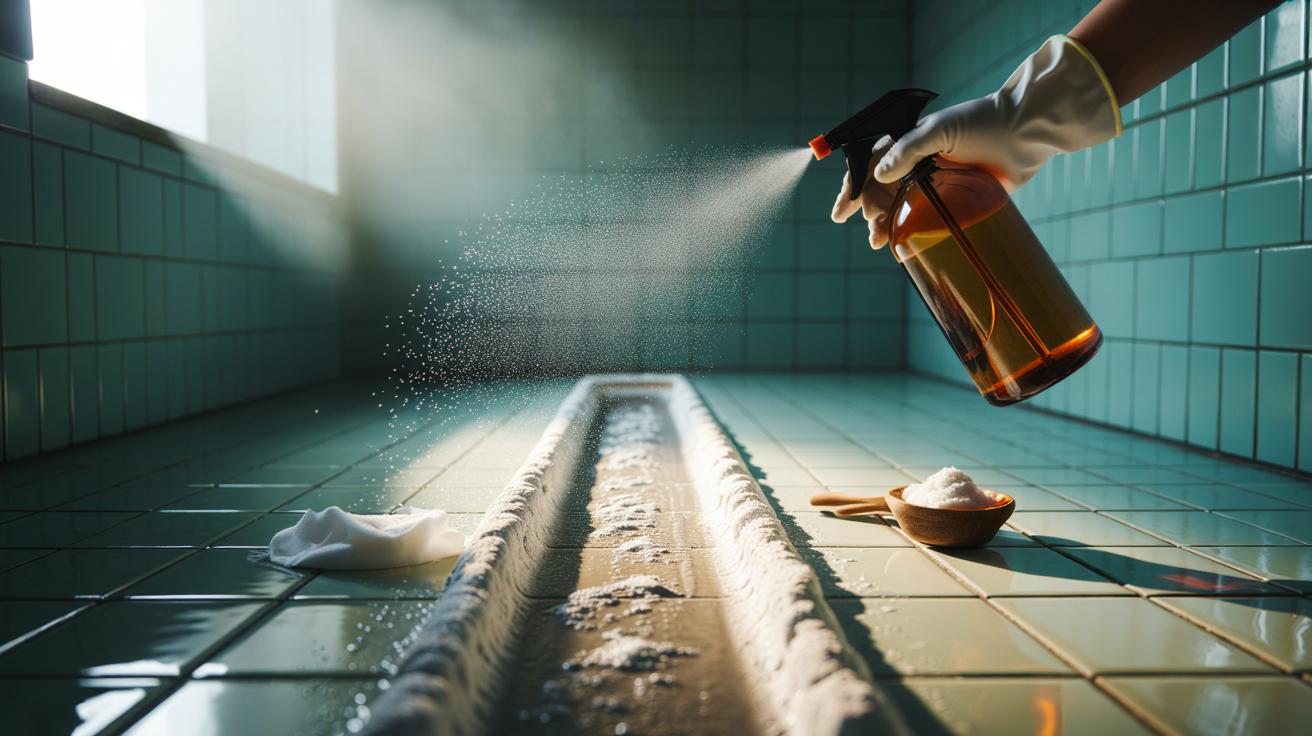
Now, lightly mist a 1:1 solution of white vinegar and water across the paste. Expect gentle fizz for 30–90 seconds. Let it sit an additional 5–10 minutes so the reaction can work in the pores. Rinse with warm water, then drag a clean microfibre towel along the lines to collect the loosened slurry. On walls, a handheld shower or jug pour works well; on floors, a damp mop followed by a dry towel prevents tide marks. For extra sparkle on light grout, a final pass with 3% hydrogen peroxide can brighten without scrubbing—just dab, wait five minutes, then rinse again.
Choosing Add-Ons and Avoiding Common Pitfalls
Different rooms, different soils. In bathrooms with soap scum, stick to the classic bicarbonate-and-vinegar reaction; it cuts through film beautifully. In kitchens stained by turmeric or wine, a follow-up dab of 3% hydrogen peroxide helps decolourise organic pigments on light grout. Test first on coloured or old grout—peroxide can subtly lighten dyes. If your home has natural stone like marble or travertine, skip vinegar entirely. Acid can etch stone in seconds. Use the baking soda paste alone and rinse with warm water, or substitute the acid step with a neutral cleaner.
Avoid common mistakes. Don’t let the paste dry rock-hard; re-mist with water if interrupted. Never mix vinegar with bleach—dangerous chlorine gas can form. Ensure ventilation when using peroxide, and keep it away from fabrics. If grout is cracked or powdery, cleaning may lift more material; seal or repair first. Warmth helps: on a chilly morning, preheat the room or use a hairdryer on low to improve reactivity and drying. Finish by drying the lines thoroughly. Dry grout resists re-soiling far better than damp grout, keeping the clean look for longer.
Quick Reference: Ratios, Timings, and Surfaces
Short on time? This crib sheet keeps you on track. The ratios below deliver a paste that clings, fizzes on cue, and rinses clean without streaks. Adjust water by a teaspoon if your baking soda is unusually fine or the air is dry. For very stained areas, repeat the cycle rather than extending dwell beyond 30 minutes; it’s safer for weak or ageing grout. Two gentle rounds beat one harsh one.
| Goal | Mixture | Dwell Time | Safe On | Avoid |
|---|---|---|---|---|
| General clean | 3 tbsp baking soda + 1 tbsp warm water | 15–25 mins | Ceramic, porcelain grout | None |
| Activate lift | Mist 1:1 water + white vinegar | 5–10 mins post-fizz | Ceramic, porcelain | Marble, limestone, travertine |
| Brighten light grout | 3% hydrogen peroxide dab | 5–8 mins | Light cement grout | Coloured grout (patch test) |
| Grease-heavy soils | Paste + drop washing-up liquid | 20–30 mins | Kitchens, utility rooms | Epoxy grout (limited effect) |
Finish every cycle with a thorough warm-water rinse and a dry microfibre wipe. If your grout isn’t sealed, consider a penetrating sealer once it’s fully dry—overnight if possible—to slow future staining. Prevention beats marathon cleans: run the extractor fan, squeegee shower walls, and keep a small box of bicarbonate handy for swift spot treatments before stains set.
Handled well, the baking soda method is a quiet revolution—cheap, accessible, and gentle on both lungs and grout. It swaps scrubbing for strategy, taps into simple reactions, and rewards patience with startlingly bright lines. As energy bills pinch and harsh chemicals fall from favour, that’s a win for homes and health. Will you try the fizz-and-rinse routine this weekend—or adapt the ratios to suit your grout and see how little effort can go a long way?
Did you like it?4.4/5 (22)