In a nutshell
- 🛏️ The hotel trick is a repeatable ritual: hold by short sides, snap, rotate, knead corners to centre, smooth the case, then a shallow karate chop—a system that restores loft and keeps pillows looking fresh all day.
- 🔬 It’s about air management: down traps air and responds to gentle agitation, microfibre needs firmer kneading, while memory foam doesn’t truly fluff; humidity flattens loft, so protectors and dry air matter.
- 🧰 Hotels rely on smart kit and timing: a zippered pillow protector, crisp percale or sateen cases, upright placement, and quick refreshes—~30 seconds at checkout, ~10 seconds at turndown—to maintain a tailored silhouette.
- 📊 Key fill differences: Down/feather—snap and light chop; microfibre—vigorous shake and defined chop; memory foam—smooth only, no chop; keep down dry, rotate synthetics, and replace as resilience fades.
- 🏠 At home, mirror the method: 30-second reset per pillow, diagonal smoothing for taut cases, strategic stacking, upgraded protectors, and moisture control—small, regular touches that deliver a consistent, luxury hotel look.
Hotel beds look impossibly crisp at noon, even after a morning rush of check-outs. The secret isn’t magic. It’s a repeatable, low-tech ritual that resets tired pillows in seconds and keeps the silhouette sharp until lights-out. Housekeepers learn a rhythm: lift, vent, sculpt, set. The aim is simple, the effect transformative. By managing air and fibre, the team restores loft and erases the tell-tale slump that screams “used.” The trick lies in how the pillow is handled, not in expensive inserts. With the right touch, even budget fillings sit proud, edges defined, cases taut, and the whole bed reads as freshly made for hours.
What Housekeepers Really Do With Pillows
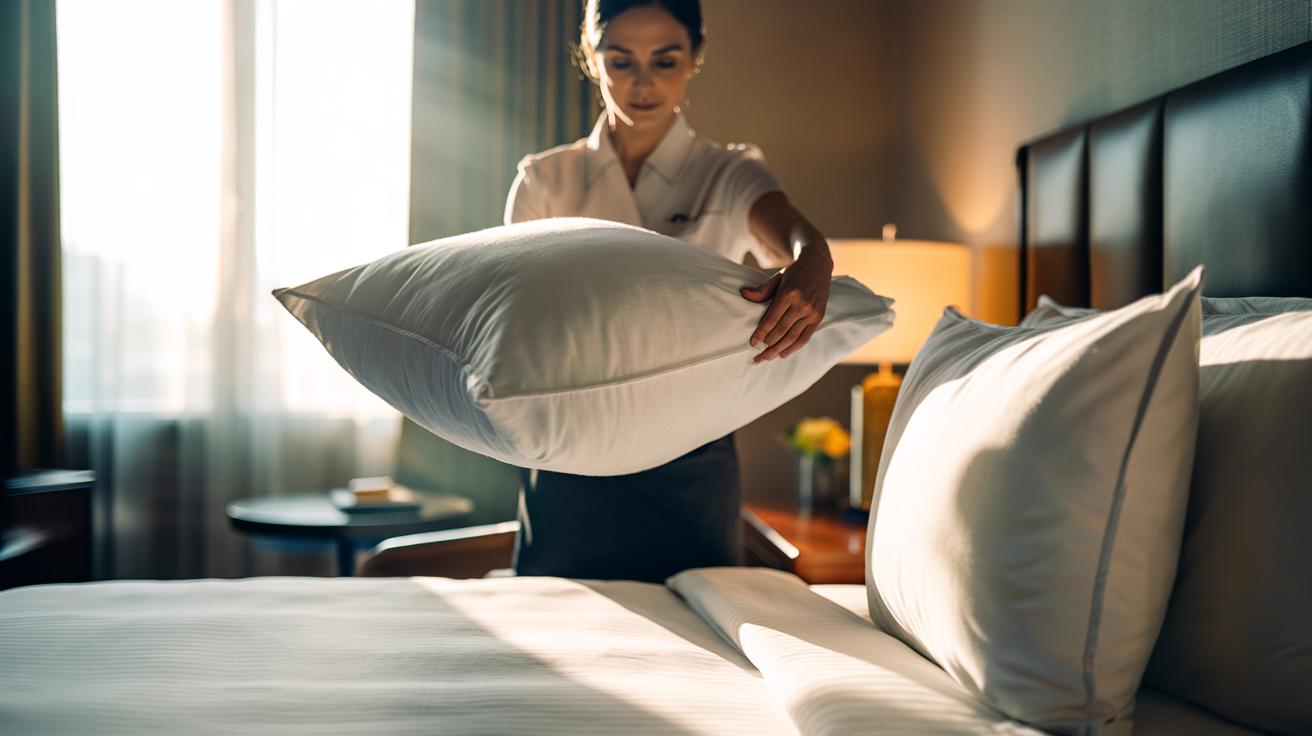
Watch an experienced room attendant for a minute and you’ll see a choreography. First, the pillow is held by its short sides and given two firm “snaps” to drive air through the fill. Then it’s rotated 90 degrees and kneaded from the corners toward the centre to concentrate support where the head will rest. The case is smoothed with a palm, pulling fabric diagonally to eliminate wrinkles. Housekeepers don’t just “chop” pillows; they engineer them. The famous karate chop comes last, a shallow notch at the crown that vents a whisper of air and creates the tailored crease guests associate with luxury.
Placement matters. Standard pillows are stacked upright against the headboard to counter gravity; Europeans often add a square behind a rectangular for a layered frame that holds shape longer. Inserts are fluffed again during turndown, a 20-second refresh that buys hours of freshness. Cases are checked for rotation so seams sit at the edge, not front-facing. The result looks artful, but it’s systematised: three touches, two rotations, one defining crease. Consistency, not force, keeps pillows looking freshly plumped all day.
The Physics of the Perfect Plump
At heart, the “hotel look” is about restoring displaced air. Down and feather blends trap micro-pockets of air between clusters; synthetic microfibre aims to mimic that with fine denier strands. When you sleep, moisture and weight compress those pockets, collapsing loft. The fix is to redistribute fill quickly so air can re-enter. Snapping and kneading create low-pressure zones that draw air back in, while the chop releases just enough to stop a bulging dome. Air management is the quiet science behind every photogenic pillow.
Material dictates method. Down responds beautifully to gentle agitation and will spring back if kept dry. Polyester fibrefill likes more vigorous kneading to break up clumps; a brisk shake plus corner-roll revives it. Memory foam is different: it doesn’t fluff in the same way, so hotels deploy it sparingly or pair it with a decorative, fluffable sham. Humidity is the spoiler, flattening loft faster. That’s why rooms get a quick midday refresh and why protectors are used: they keep perspiration out of the fill so the pillow stays buoyant, light, and camera-ready between services.
Tools, Timing, and Textiles
Five items do most of the work: a breathable pillow protector, a crisp percale or sateen case, dry air, a practiced grip, and time. Not much time. Thirty seconds per pillow at checkout, ten seconds at turndown, and the look holds. Hotels favour medium-fill inserts that are easy to manipulate. The schedule is deliberate: reset after departure, refine at afternoon service, and a last glance before evening arrivals. Small, regular interventions outperform heavy fixes. Protectors add a friction layer that helps cases stay taut; higher thread-count fabrics resist creasing and keep edges sharp.
| Pillow Fill | Characteristics | Hotel Fluffing Notes | Longevity/Tips |
|---|---|---|---|
| Down/Feather | Light, airy, compressible | Snap, knead corners to centre, light chop | Keep dry; air weekly |
| Microfibre | Springy, uniform | Vigorous shake, roll edges, defined chop | Machine refresh, replace sooner |
| Memory Foam | Contouring, dense | No true fluff; smooth case, no chop | Spot clean; rotate often |
Textiles complete the picture. Percale offers that matte, modern snap; sateen reads glossy for a softer, boutique feel. Cases with envelope closures hide gaping ends, sustaining the illusion of fullness. Trolleys carry spare protectors so damp ones never go back on. The upshot is simple: choose the right fill, protect it, and touch it often. That’s the hotel formula, repeated floor after floor, day after day, with quietly reliable results.
Try the Hotel Method at Home
Set a timer. Truly. Give each pillow 30 seconds. Hold the short sides, snap twice. Rotate, then knead from corners to centre, compressing air out and inviting it back in. Smooth the case diagonally with firm palms to eliminate slack. Create a shallow karate chop at the crown for that tailored line, or skip it if you prefer a rounded profile. Stack upright against the headboard to fight gravity. Do this once after you make the bed, then again before guests arrive.
Upgrade the basics. Use a zippered pillow protector to keep moisture out of the fill. If your inserts are lifeless, choose medium-density microfibre or a down blend that responds to fluffing. Keep the room dry; crack a window, or run a dehumidifier on damp days. Replace cases as soon as they look tired—fresh fabric is half the look. And keep it light-touch. A quick daily ritual will do more than a weekly marathon, leaving your bed looking editorial, not overworked.
Hotels rely on rhythm, not force, to keep pillows photo-ready from breakfast to bedtime, and the same ritual translates beautifully to home life. With the right insert, a clean protector, and a practiced 30-second reset, any bed can hold its shape, sell serenity, and survive a busy day. The technique costs nothing, yet it reads as luxury. Consistency is the quiet luxury you can feel and see. How will you adapt this simple pillow-fluffing routine to suit your bedroom, your materials, and the way you like to sleep?
Did you like it?4.6/5 (25)