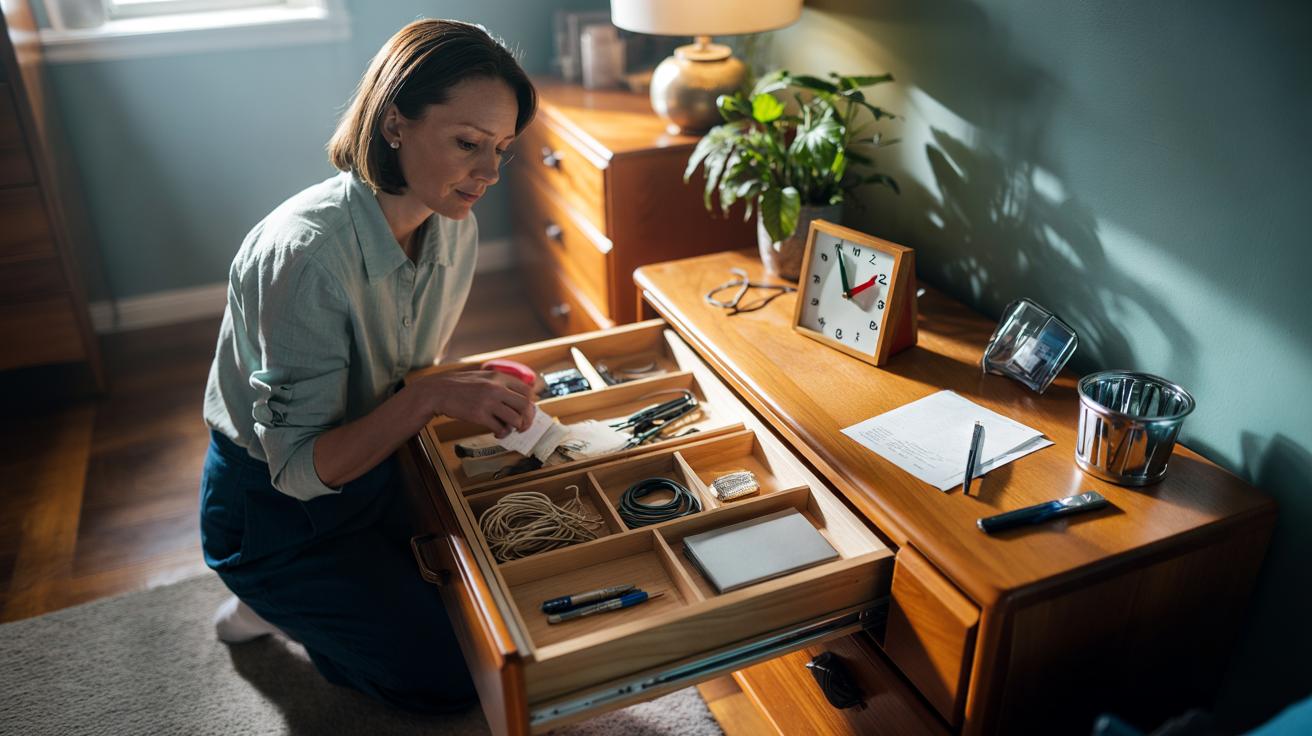
In a nutshell
- 🧠 Small, bounded decluttering—one drawer a day—leverages neuroplasticity: repetition and completion boost dopamine, strengthen self-regulation, and retrain the brain for calm.
- ✅ Reduces cognitive load by shrinking visual stimuli and closing open loops; ritualised action builds procedural memory, so the task becomes easier and attention frees up.
- ⏱️ A low-friction method: a 10–12 minute, time-boxed reset with a hard stop builds consistency, curbs perfectionism, and prevents burnout through controlled boundaries.
- 🗂️ A clear five-step routine—pick, empty, sort (keep/bin/elsewhere), clean and organise, then stop and celebrate—creates predictability and cements the habit with quick wins.
- 🏡 Wider impact: the approach generalises to email, budgeting, and chores, building agency, steadier moods, and a calmer household culture—especially practical in space-tight UK homes.
Psychologists in the UK are increasingly pointing to a homely, almost cheeky intervention: tidy one drawer a day. It sounds quaint. Yet it nudges the brain toward calm by shrinking chaos and growing control in tiny, repeatable loops. A drawer offers a fixed boundary, modest decisions, and fast reward, which is exactly what an overstretched mind can stomach. Small spaces make change feel safe. The science behind it lies in neuroplasticity: habits carve pathways; repetition strengthens them; success sticks. Ten minutes, a handful of choices, an orderly finish. The ripple out? Fewer mental tabs open, more spare attention, a lighter body. This isn’t interior design. It’s nervous-system hygiene.
Why Small Acts Quiet a Busy Mind
When we declutter a contained space, the brain gets two powerful signals: completion and competence. Completion closes cognitive loops, reducing the low-level hum of unfinished tasks that steals bandwidth. Competence delivers a quick dose of dopamine, the neurotransmitter that flags, “This worked; repeat it.” That’s the foundation of neuroplastic change. Each mini-win rewrites what your nervous system expects from your morning: not firefighting, but a doable mission with a clean end state. Ten minutes is enough to shift your day’s trajectory.
There’s also the matter of cognitive load. Visual clutter taxes attention and short-term memory. Clearing a single drawer reduces stimuli at eye level and hand level—key channels for stress signalling. The ritual is equally important. Starting with the same small container each day builds procedural memory, the kind of knowing that moves from effortful to automatic. As effort drops, the brain frees resources for planning, creativity, even rest. It’s counterintuitive but true: order in a tiny place expands mental space elsewhere.
Psychologists call this a “low-friction behaviour.” You don’t need motivation surges or a free Saturday. You need a boundary, a timer, and permission to stop when done. Stopping on time is the habit. Not overreaching prevents burnout and future avoidance. That restraint trains self-regulation—the very circuitry that tamps down anxiety when life gets loud.
A Five-Step Drawer Routine
A drawer a day isn’t a metaphor; it’s a sequence. Keep it simple, almost ritualised, so the brain recognises the pattern and anticipates reward. Aim for a 10–12 minute pass, not a museum-grade overhaul. The goal is to reset, not perfect. Clarity beats perfection every time. Below is a compact routine that pairs actions with brain benefits to make the logic visible and the habit stickier.
| Step | Action | Brain Benefit |
|---|---|---|
| 1 | Pick one drawer; set a 10-minute timer. | Boundary reduces overwhelm; time box curbs avoidance. |
| 2 | Empty contents onto a clear surface. | Visual reset lowers cognitive load. |
| 3 | Sort fast: keep, bin, elsewhere. | Fewer categories reduce decision fatigue. |
| 4 | Wipe, return by function; label if useful. | Order cues predictability and calm. |
| 5 | Stop at the timer; celebrate the win. | Dopamine reinforces the loop; habit consolidates. |
That celebratory beat matters. A brief note—“Desk drawer: reset”—or a tick on a wall calendar provides visible evidence that your effort exists. It transforms an invisible, private act into trackable progress, which the brain reads as momentum. Over a fortnight, rotate drawers by zone—desk, bedside, kitchen—so context changes, novelty stays, and boredom doesn’t creep in. Consistency, not intensity, does the rewiring. If you share a home, agree on what qualifies as “keep” in shared drawers to avoid domestic friction. The system should lower tension, not spark debates about old phone chargers.
From Drawers to Daily Calm
The power of this habit is not the tidy drawer, lovely as that is. It’s the generalisation. A brain trained to seek bounded tasks starts slicing big problems into smaller ones: emails by sender, washing by colour, budgeting by week. That shift reduces the panic that arrives when everything feels “all at once.” When tasks become containable, so does stress. You’re building agency, which psychologists consistently link to resilience and better mood.
There’s also a sensory dimension. Hands sorting, a surface wiped clean, a soft close of wood on wood—these are grounded, rhythmic cues that downshift a jittery nervous system. They cut through rumination, the repetitive thinking that inflates anxiety. A neat utensil drawer won’t cure grief or stop a deadline, but it sets a floor under your day. One stable platform makes the next move steadier. Call it domestic ballast. Or call it what clinicians might: behavioural activation with an aesthetic dividend.
In UK homes where space is tight and schedules tighter, the drawer rule respects reality. It ignores the fantasy of “getting on top of everything” and invests in repeatable wins. Add light tweaks—place a small recycling bin within arm’s reach; keep labels and a pen in the first drawer you reset—so the path to doing is almost frictionless. Make the right thing the easy thing. Over weeks, partners and children copy the rhythm, and a household culture forms: quick resets, clear surfaces, easier mornings.
Think of “one drawer a day” as a psychological lever disguised as housework. It gives you a place to begin when motivation is missing and an end point when perfectionism tries to take over. The brain likes edges, and a drawer has edges you can finish. In a noisy world, that’s no small mercy. Calm is not a mood; it’s a practice. Which drawer will you open first, and what might change if you closed it again—on time—every day this month?
Did you like it?4.6/5 (30)